The Gendered Disconnect: Why Are Men Left Out of Conversations About Bodily Awareness?
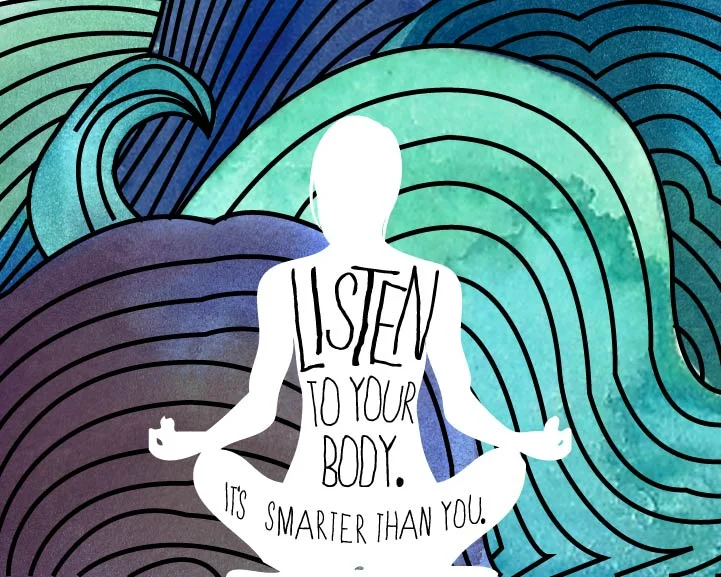
I follow a woman on Instagram who shares Kegel (pelvic floor) exercises. Each time she appears on my feed, I stop what I'm doing and follow along. It has become an unexpected habit—one I didn’t intentionally cultivate, but one that now feels like a small act of care for my body.
Pelvic floor exercises are often associated with women’s health—pregnancy, postpartum recovery, bladder control, and yes, sexual function. But as I reflected on the importance of these exercises, I couldn’t help but wonder: what about men? Do men do pelvic floor exercises?
So, I went down a Google rabbit hole, and it turns out pelvic floor health is just as important for men. It plays a role in bladder and bowel control, core strength, and even erectile function. Yet, I have never seen or heard Kegel exercises targeted at men (or even encouraged for both genders). In fact, while digging, I found that most fitness programs for men claiming to target the male pelvic floor were actually just core exercises. While beneficial, these exercises do not specifically engage the pelvic floor the way Kegels do.
This left me questioning: why are men so rarely taught to tune into this important aspect of their health?
The Gendered Expectation of Bodily Awareness
From a young age, women are conditioned to be hyper-aware of their bodies. This often reflects our reductive role within a patriarchal society that values women primarily for their reproductive capabilities. We track our periods; are told how to eat, move, and rest in ways that optimize fertility. We are bombarded with pregnancy checklists that outline what to avoid, what to consume, and what to monitor. Beyond reproductive health, women are constantly bombarded with messaging about our skin, weight, beauty, and overall attractiveness.
In contrast, men’s bodies are largely left to their own devices. While there are still societal ideals about the male body, these standards are not policed or regulated as intensely as those for women’s bodies. In a patriarchal society, engaging in mindful self-care or paying attention to bodily signals is often dismissed as feminine. Men are expected to be strong, muscular, and stoic—traits that supposedly define “real men.” When men engage in acts of self-care like getting their nails done, practicing Pilates (a growing trend on social media that highlights the differences in exercise goals between men and women), or taking their friends out for dinner (a recent social media trend framed as a rejection of spending time and money on women), their masculinity is often called into question. These actions, which could be seen as healthy ways to cultivate community and self-care, are often dismissed as signs of weakness, reinforcing the narrow view that a man’s worth is tied solely to his physical toughness.
Patriarchy’s Silent Sabotage
The same system that pressures women to be hyper-aware of our bodies actively discourages men from engaging with theirs. This disconnection leads to self-destructive behaviors. Take reproductive health, for example. Research has shown that sperm quality, early miscarriages, and pregnancy complications can be linked directly to the father’s health. Factors such as smoking, poor diet, stress, and lack of exercise all have a direct impact on fertility and fetal development. Yet, when couples struggle to conceive or experience miscarriages, the blame almost always falls on the woman.
Recently, there was a growing discussion on social media about how men should be preparing their bodies for pregnancy in the same way women do—by exercising, eating well, cutting out alcohol and cigarettes, and reducing stress. The backlash to this idea was swift. Many men mocked the notion that they should change their habits in preparation for fatherhood. This response speaks volumes about the larger cultural disconnect between men and their own health. Conditions like erectile dysfunction, cardiovascular disease, and mental health struggles are worsened by the idea that “real men” don’t need to pay attention to their bodies. Yet, this self-neglect only perpetuates cycles of poor health.
Breaking the Cycle
If we gauge the pulse of society through social media, it is evident how deeply invested men are in upholding these patriarchal ideals—even when those same ideals hurt them. Men could benefit immensely from breaking out of rigid gender norms, embracing self-care, and prioritizing emotional intelligence and bodily awareness. These shifts could foster healthier relationships, deeper emotional connections, and better physical well-being. But for too many men, the fear of being labeled as “less masculine” outweighs the tangible benefits of self-improvement.
It is frustrating to watch as patriarchy continues to sell men a false sense of power and control, making them believe they are born winners when in reality, they are being robbed of emotional depth, community, health, and longevity. This trade-off is one that too many men are willing to accept, conditioned by a society that teaches them they should suffer—by bottling up emotions, disconnecting from their bodies, and limiting their relationships. Why? Because the alternative would mean embracing traits society has deemed feminine.
In the current economic climate, where traditionalist and conservative values are taking hold in many parts of the world, it is hard to see a major shift happening anytime soon. But this is not just a political or cultural issue; it is an economic one as well, as sexism remains deeply embedded in the global economic project. Men can change, but far too many refuse to question the systems that benefit them, even if those systems are quietly eroding their health, relationships, and futures.
In the meantime, I will continue doing my pelvic floor exercises. I will care for myself in ways that reflect my needs while remaining mindful of the balance between self-care and societal expectations. I hope others—especially men—feel encouraged to break free from restrictive norms and do the same.
Notes:
@femalephysioco (IG), https://www.instagram.com/femalephysioco/
'Male Pelvic Floor Exercises,' NHS, https://www.uhsussex.nhs.uk/resources/male-pelvic-floor-exercises/
Caroline Lomax, (2021) 'The importance of engaging young men to take care of their health and wellbeing,' NHS England, 14 June 2021, https://www.england.nhs.uk/blog/the-importance-of-engaging-young-men-to-take-care-of-their-health-and-wellbeing/Maya and Hunter (@maya.and.hunter), (2025) 'Replying to @DumiC some feathers were ruffled…' Tik Tok, https://www.tiktok.com/@maya.and.hunter/video/7458046868656803118?_r=1&_t=ZG-8tZwlbaG8Cu
Muna Abed Alah, (2022) 'Unlocking the Path to Healthier Families: The Untapped Potential of Men’s Preconception Health,' National Library of Medicine, https://pmc.ncbi.nlm.nih.gov/articles/PMC10844380/
Professor Neil (@professor_neil), (2025) 'Take your homies out to fancy dinners!' Instagram, https://www.instagram.com/reel/DFF_ae5uH0n/?igsh=MWFkemF0YzJsczhkZg%3D%3D
.jpg)

Comments
Post a Comment